What Is Roof Ventilation? Why Your Attic Needs to Breathe
When most homeowners think about their roof, they think about shingles, flashing, and keeping rain out. But there is another important part of your roofing system that you may never notice from the ground: roof ventilation.
Proper ventilation helps regulate the temperature and moisture levels inside your attic. Without adequate airflow, heat and moisture can become trapped beneath your roof, potentially contributing to problems with roofing materials, insulation, wood framing, and indoor comfort.
This is particularly important in Florida, where homes deal with intense heat, humidity, and frequent rain throughout the year.
For homeowners in Titusville and throughout Brevard County, understanding how roof ventilation works can help you make better decisions when maintaining, repairing, or replacing your roof.
What Is Roof Ventilation?
Roof ventilation is a system designed to allow air to move through your attic space.
A properly designed ventilation system generally uses two types of airflow:
- Intake ventilation brings fresh outside air into the attic.
- Exhaust ventilation allows warm, humid air to escape.
The goal is to create consistent airflow through the attic rather than allowing heat and moisture to become trapped.
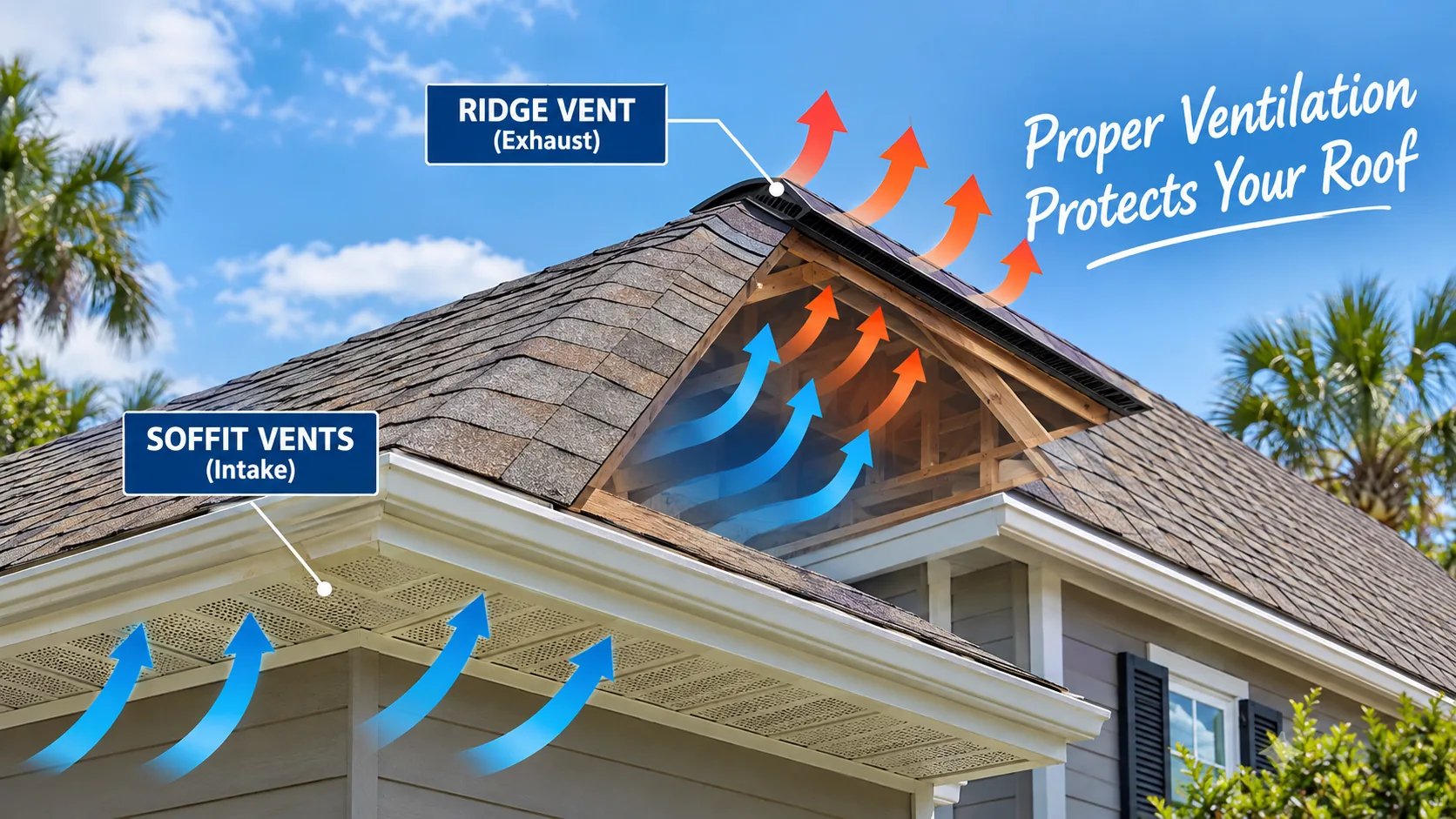
One of the most common examples is a combination of soffit vents for intake and a ridge vent for exhaust.
Why Does Your Attic Need Ventilation?
Your attic can become extremely hot during a Florida summer.
Sunlight heats your roof throughout the day, and some of that heat transfers into the attic space below. Without adequate ventilation, that hot air can remain trapped.
Proper attic ventilation can help:
- Reduce excessive heat buildup
- Manage attic moisture
- Reduce condensation
- Protect insulation
- Help protect wood components
- Support the overall performance of your roofing system
- Improve attic conditions
Ventilation is not designed to make your attic cold. Instead, the goal is to help maintain a more balanced environment.
How Does Roof Ventilation Work?
A properly designed system typically works by allowing cooler outside air to enter through lower portions of the roof while warmer air exits through higher portions.
This creates a natural airflow path through the attic.
Intake Vents
Intake vents allow outside air into the attic.
These are commonly located along the soffits or lower edges of the roof.
Exhaust Vents
Exhaust vents allow warm, moist air to escape.
These may include ridge vents, static vents, or other ventilation systems depending on the roof design.
For ventilation to work effectively, the intake and exhaust components need to work together.
What Is a Ridge Vent?
A ridge vent is an exhaust ventilation system installed along the highest point of a roof.
Because warm air naturally rises, the ridge is an ideal location for exhaust ventilation.
Ridge vents are often installed along the roof ridge as part of the roofing system so they can allow air to escape while maintaining protection against the elements.
If your home has a ridge vent, it may not be obvious from the ground because it can blend into the roofline.
What Are Soffit Vents?
Soffit vents are typically installed underneath the eaves of a roof.
Their primary job is to provide intake ventilation.
Fresh outside air enters through the soffit vents and moves upward through the attic toward the exhaust vents.
This creates the airflow necessary for a balanced ventilation system.
If soffit vents are blocked by insulation, debris, or other obstructions, the attic may not receive the airflow it needs.
Why Florida Homes Need Proper Attic Ventilation
Florida's climate creates some unique challenges for roofing systems.
Homes throughout Titusville, Cocoa, Merritt Island, Rockledge, Melbourne, Palm Bay, Viera, and Brevard County experience:
- High temperatures
- Intense sunlight
- High humidity
- Heavy rainfall
- Tropical storms
- Hurricane conditions
That combination means your attic can experience significant heat and moisture.
Proper ventilation helps your roofing system manage these conditions more effectively.
What Happens If Your Attic Isn't Properly Ventilated?
Poor attic ventilation does not necessarily cause an immediate roof failure. Instead, problems can develop gradually.
Potential issues include:
Excessive Heat
Hot air can accumulate inside the attic during the summer.
Moisture and Condensation
Moisture can accumulate when warm, humid air encounters cooler surfaces.
Damage to Wood
Long-term moisture exposure can contribute to deterioration of roof decking and other wood components.
Insulation Problems
Moisture can affect insulation performance and contribute to other attic issues.
Premature Roofing Wear
Excessive heat and moisture can contribute to the deterioration of roofing components over time.
Signs Your Attic May Have a Ventilation Problem
Ventilation problems are not always easy to identify from outside the home.
Some potential warning signs include:
- Excessive heat in the attic
- Condensation
- Damp insulation
- Musty odors
- Mold or mildew
- Moisture on nails or other metal components
- Deteriorating wood
- Unusually high attic temperatures
Florida homeowners should pay particular attention to heat and moisture because both can affect the long-term condition of a roofing system.
Does Roof Ventilation Help Your Roof Last Longer?
Proper ventilation can help create a healthier attic environment, which can support the longevity of your roofing system.
However, ventilation is not a replacement for quality roofing materials, proper installation, maintenance, or repairs.
Your roof works as a complete system.
That includes:
- Shingles
- roof underlayment
- Roof decking
- roof flashing
- Roof valleys
- Pipe boots
- Drip edge
- Ventilation
Every component has a purpose, and problems with one part of the system can sometimes affect other components.
Can Roof Ventilation Help With Energy Efficiency?
Proper attic ventilation can contribute to a home's overall thermal performance by helping manage heat buildup in the attic.
However, ventilation alone should not be viewed as a guaranteed way to dramatically reduce your energy bills.
Other factors play major roles, including:
- Insulation
- Air sealing
- Windows
- HVAC efficiency
- Roofing materials
- Home design
- Sun exposure
For Florida homeowners, a properly designed roofing and attic system can help support overall home comfort.
Does Every Roof Need a Ridge Vent?
Not necessarily.
The appropriate ventilation system depends on the home's design, roof configuration, attic layout, existing intake ventilation, and other factors.
Some roofs may work well with ridge vents and soffit vents, while others may require different ventilation solutions.
A professional roofing contractor can evaluate the existing system and determine whether improvements are appropriate.
Can Roof Ventilation Be Added to an Existing Roof?
In some cases, yes.
The feasibility depends on your roof's design and existing ventilation.
Adding or modifying ventilation should be done carefully because simply installing an exhaust vent without adequate intake ventilation may not solve the underlying problem.
A balanced system is important.
If you are already considering a roof replacement, ventilation should be evaluated as part of the project.
Our guide on how long a roof replacement takes in Brevard County explains some of the other components contractors evaluate during a replacement.
How Roof Ventilation Relates to Roof Replacement
A roof replacement is an opportunity to evaluate the entire roofing system rather than simply installing new shingles.
During a replacement, a professional roofer can evaluate:
- Existing ventilation
- Roof decking
- Underlayment
- Flashing
- Roof valleys
- Pipe boots
- Drip edge
- Shingles
If ventilation is inadequate, it may be possible to improve the system while the new roof is being installed.
Your roofing contractor should explain what your home needs rather than automatically recommending additional ventilation that may not be appropriate for the roof design.
Roof Ventilation and Florida Building Requirements
Roof ventilation requirements can vary depending on the home's design, roof assembly, attic configuration, and applicable building codes.
Because Florida's building requirements can change, ventilation work should be designed and installed according to the applicable current requirements and manufacturer specifications.
This is another reason professional installation matters when modifying an existing roofing system.
How to Keep Your Roof Ventilation Working Properly
There are a few things homeowners can do to help maintain proper airflow.
Keep Soffit Vents Clear
Make sure insulation, debris, or other materials are not blocking intake vents.
Inspect Your Attic
Look for signs of moisture, condensation, or deteriorating wood.
Check After Major Storms
Storms can damage or displace roofing components and vents.
Schedule Professional Inspections
A roofing professional can inspect ventilation along with the other components of your roofing system.
Why Brevard County Homeowners Choose Robert Jones Roofing
At Robert Jones Roofing & General Contracting, we believe your roof should be evaluated as a complete system.
Our team looks beyond the shingles to evaluate important components such as ventilation, flashing, underlayment, roof decking, valleys, and roof penetrations.
We proudly serve homeowners throughout Titusville and Brevard County, including:
- Titusville
- Cocoa
- Merritt Island
- Rockledge
- Melbourne
- Palm Bay
- Viera
- Surrounding Brevard County communities
We're a family-owned and operated roofing company with more than 20 years of experience serving local homeowners.
We provide:
- Roof inspections
- Roof repairs
- Roof replacements
- Storm damage assessments
- Residential roofing
- Commercial roofing
- Free estimates
Frequently Asked Questions
What is the purpose of roof ventilation?
Roof ventilation helps move air through the attic, allowing heat and moisture to escape while bringing fresh outside air into the space.
What is the difference between a ridge vent and a soffit vent?
A ridge vent is generally used for exhaust, while soffit vents provide intake airflow. They work together to create airflow through the attic.
Can poor ventilation cause roof problems?
Poor ventilation can contribute to excessive heat and moisture in the attic, which may affect insulation, wood components, and the overall roofing system over time.
Does every house need a ridge vent?
No. The best ventilation system depends on the home's design, roof configuration, and existing ventilation.
Can I add attic ventilation to my existing roof?
Sometimes. A professional should evaluate the existing intake and exhaust ventilation before adding or modifying vents.
Schedule Your Free Roof Inspection in Brevard County
Your roof does more than keep rain out. The entire roofing system needs to work together to protect your home from Florida's heat, humidity, rain, and storms.
If you're concerned about attic heat, moisture, roof ventilation, or the condition of your existing roof, a professional inspection can help determine whether your home needs attention.
Robert Jones Roofing & General Contracting provides professional roof inspections, repairs, storm damage assessments, and roof replacements throughout Titusville and Brevard County, Florida.
Contact us today to schedule your FREE roof inspection and estimate.