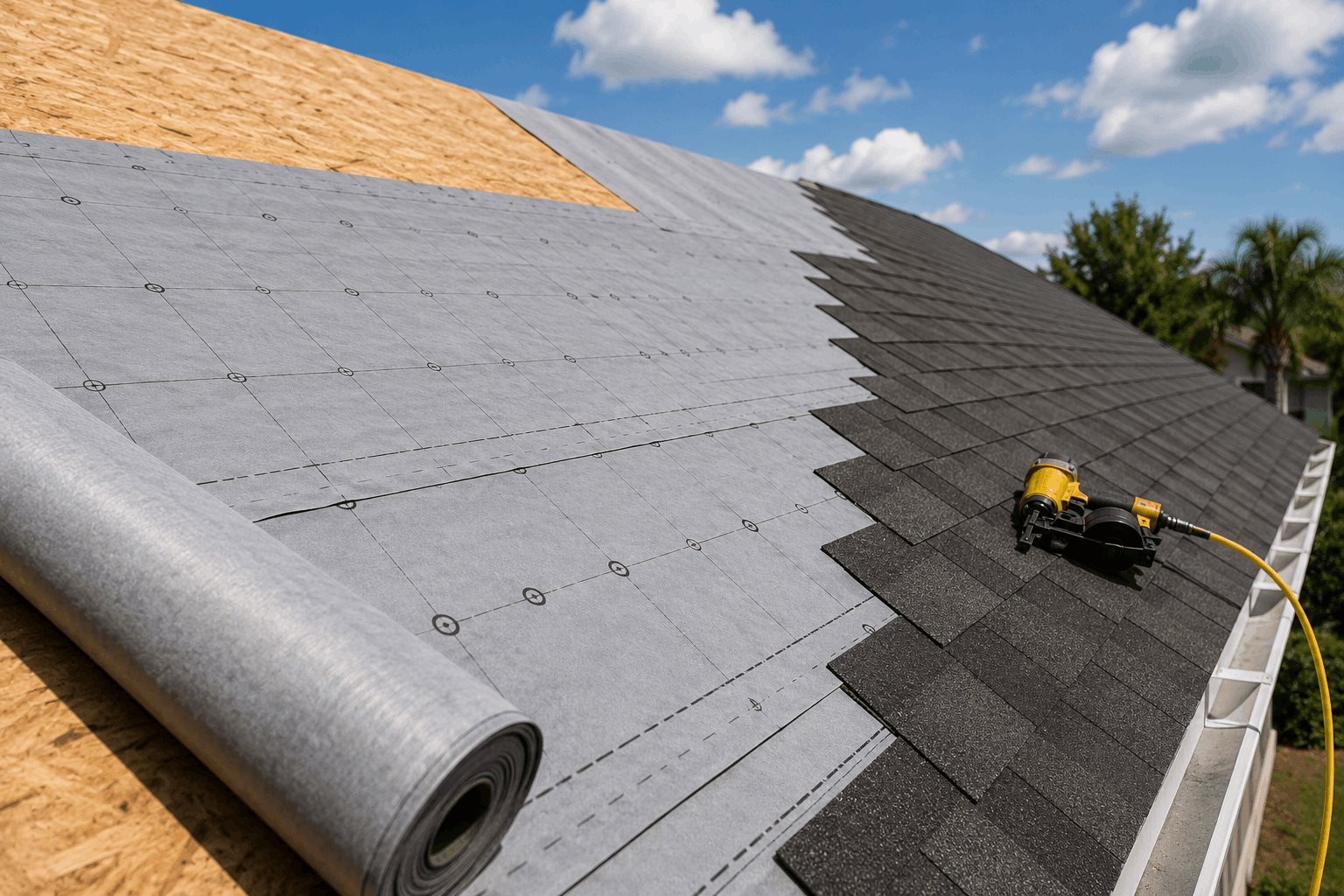
When most homeowners think about a roof, they picture shingles. While shingles are the first line of defense against the elements, there's another critical layer underneath that often goes unnoticed—roof underlayment.
Roof underlayment is one of the most important components of your roofing system because it provides an extra layer of protection against moisture, wind-driven rain, and leaks. Even if shingles become damaged during a storm, quality underlayment helps keep water from reaching your home's roof decking and interior.
At Robert Jones Roofing & General Contracting, we install high-quality roofing systems for homeowners throughout Titusville, Melbourne, Palm Bay, Cocoa, Merritt Island, Rockledge, Viera, and across Brevard County. Understanding how roof underlayment works can help you make informed decisions when it's time to repair or replace your roof.
What Is Roof Underlayment?
Roof underlayment is a protective material installed directly over your roof decking and beneath your shingles or other roofing materials.
Its primary job is to create a secondary water-resistant barrier that helps protect your home if rain gets underneath the shingles.
Think of it as your roof's backup defense. While shingles handle most of the weather, underlayment provides additional protection against leaks, especially during Florida's heavy rains and high winds.
Why Is Roof Underlayment Important?
Underlayment serves several important purposes beyond simply keeping water out.
A quality underlayment helps:
- Protect your roof decking from moisture
- Reduce the risk of roof leaks
- Add protection during hurricanes and severe storms
- Prevent wind-driven rain from reaching your home
- Improve the overall durability of your roofing system
- Provide temporary weather protection during roof installation
Without underlayment, even a small amount of water that gets beneath your shingles could quickly damage your roof decking, insulation, and ceilings.
Types of Roof Underlayment
There are several types of roof underlayment used in residential roofing.
Synthetic Underlayment
Today, synthetic underlayment is the preferred choice for most roof replacements.
Benefits include:
- Lightweight
- Strong and tear-resistant
- Excellent moisture protection
- Better performance during Florida storms
- Longer-lasting than traditional felt
Many homeowners choose synthetic underlayment because it provides superior durability and protection.
Asphalt-Saturated Felt
Often called "felt paper," this traditional underlayment has been used for decades.
Although it's still used in some situations, felt is generally more susceptible to tearing and absorbing moisture compared to modern synthetic products.
Self-Adhering Underlayment
Some areas of the roof may require self-adhering waterproof underlayment for additional protection.
This material creates a watertight seal around vulnerable areas where leaks are more likely to occur.
How Underlayment Protects Florida Homes
Florida's climate creates unique challenges for roofing systems.
Throughout Brevard County, roofs are exposed to:
- Intense UV rays
- Heavy afternoon thunderstorms
- Tropical storms
- Hurricanes
- High humidity
- Wind-driven rain
Because of these conditions, quality underlayment plays an important role in helping protect your home if shingles become damaged or temporarily lifted during severe weather.
Does Roof Underlayment Need to Be Replaced?
Yes.
Whenever a new roof is installed, the old underlayment should also be replaced.
Installing new shingles over old underlayment can reduce the performance of your new roofing system and increase the risk of future leaks.
A complete roof replacement includes:
- New shingles
- New underlayment
- Inspection of roof decking
- Flashing inspection or replacement as needed
- Proper ventilation evaluation
Replacing all of these components together helps maximize the lifespan of your new roof.
Can Underlayment Be Damaged?
Absolutely.
Although it's protected beneath your shingles, underlayment can deteriorate over time because of:
- Roof leaks
- Aging roofing materials
- Hurricane damage
- Poor installation
- Long-term moisture exposure
If underlayment becomes compromised, it may no longer provide adequate protection for your roof decking.
Signs Your Roof Underlayment May Be Failing
Because underlayment isn't visible, homeowners often don't realize there's a problem until other signs appear.
Common warning signs include:
- Water stains on ceilings
- Roof leaks after storms
- Moisture in the attic
- Sagging roof decking
- Mold or mildew growth
- Damaged or missing shingles
If you notice any of these issues, scheduling a professional roof inspection is the best way to determine whether your roofing system has been compromised.
Why Professional Installation Matters
Even the best roofing materials won't perform properly if they're installed incorrectly.
Proper underlayment installation requires:
- Correct overlap between sections
- Secure fastening
- Proper sealing around roof penetrations
- Careful installation around flashing, valleys, and vents
Professional installation helps ensure your roof performs as designed for years to come.
Why Homeowners Across Brevard County Choose Robert Jones Roofing
At Robert Jones Roofing & General Contracting, we know that every layer of your roof matters—not just the shingles you see from the ground.
That's why every roof replacement we complete includes a careful inspection of your roof decking, flashing, ventilation, and underlayment to help ensure your new roofing system provides lasting protection.
Homeowners throughout Titusville, Melbourne, Palm Bay, Cocoa, Merritt Island, Rockledge, Viera, and across Brevard County trust us because we provide:
- Family-owned and operated service
- More than 20 years of roofing experience
- Licensed and insured professionals
- High-quality roofing materials
- Honest recommendations
- Excellent workmanship
- Thorough cleanup
- Free roof inspections and estimates
Frequently Asked Questions
What does roof underlayment do?
Roof underlayment provides a water-resistant barrier between your roof decking and shingles, helping protect your home if water gets beneath the roofing materials.
Is synthetic underlayment better than felt?
For most Florida homes, synthetic underlayment offers better durability, tear resistance, and moisture protection than traditional felt.
Is roof underlayment required?
Yes. Modern roofing systems require underlayment as part of a properly installed roof and to meet building code requirements.
Can underlayment stop roof leaks?
Underlayment helps reduce the risk of leaks by serving as a secondary barrier, but it isn't designed to replace damaged shingles or flashing. If your roof is leaking, it's important to have it inspected by a professional.
Schedule Your Free Roof Inspection in Brevard County
Whether your roof has been damaged by a storm or is simply reaching the end of its lifespan, every part of your roofing system matters—including the underlayment hidden beneath the shingles.
At Robert Jones Roofing & General Contracting, we're committed to installing complete roofing systems that are built to withstand Florida's challenging weather conditions.
If you're considering a roof replacement or have concerns about your current roof, contact us today to schedule your FREE roof inspection and estimate. We're proud to serve homeowners throughout Titusville, Melbourne, Palm Bay, Cocoa, Merritt Island, Rockledge, Viera, and all of Brevard County.