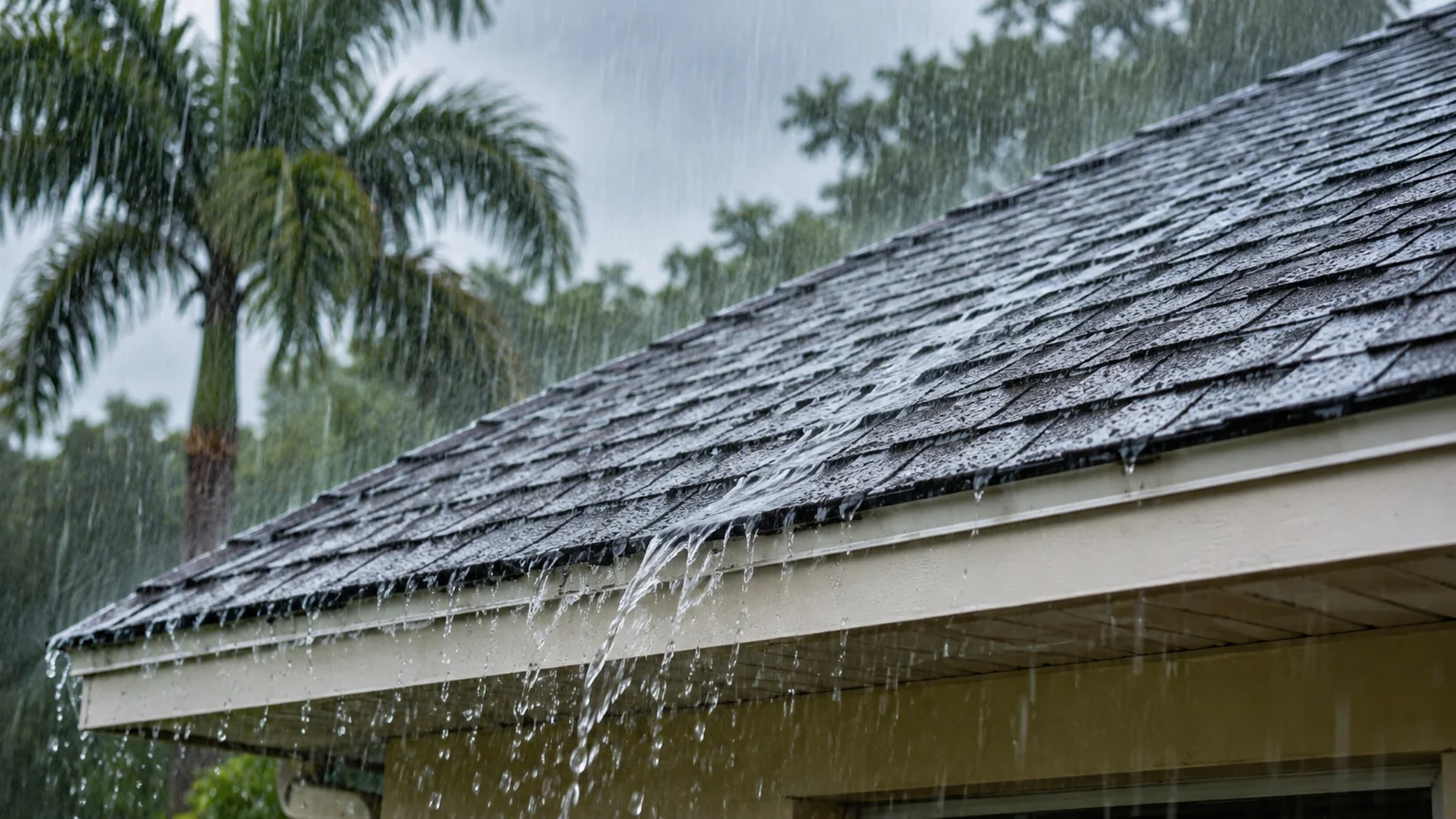
If you notice a ceiling stain, dripping water, or damp drywall after a Florida downpour, your roof may have a leak that only becomes obvious during heavy rain. For homeowners in Titusville and throughout Brevard County, wind-driven rain and repeated storms can expose weaknesses around shingles, flashing, vents, and other roof details.
Below are seven common reasons a roof leaks during heavy rain, what you can safely check, and when to schedule a professional inspection.
1. Damaged or Missing Shingles
Shingles form a key part of your roof's weather protection. Strong winds, aging materials, and storm debris can loosen, crack, or remove shingles. When that happens, rainwater may reach the underlayment or vulnerable roof decking beneath them.
Watch for: shingles on the ground, visible bare patches, curled shingle edges, or leaks that appear after a windy storm.
2. Worn or Improperly Sealed Roof Flashing
Flashing is the metal or other waterproof detailing installed where a roof meets a chimney, wall, skylight, or other penetration. Loose flashing, failed sealant, corrosion, or poor installation can create a path for water during a downpour.
Watch for: water stains near chimneys, walls, or other places where the roof changes direction or meets another structure.
3. Leaking Plumbing Vent Boots and Roof Penetrations
Plumbing vents and other roof penetrations need properly fitted seals. Over time, rubber boots can crack, fasteners can loosen, and sealants can deteriorate in Florida's heat and sun. Heavy rain can then enter around the opening.
Watch for: isolated ceiling stains or dripping near the location of a plumbing vent or roof-mounted fixture.
4. Problems in Roof Valleys
A roof valley is where two sloped roof sections meet. Valleys carry concentrated runoff, especially during intense thunderstorms. Damaged shingles, displaced valley materials, debris buildup, or installation defects can allow water to get beneath the roofing system.
Watch for: recurring leaks below the point where two roof slopes come together.
5. Clogged Gutters and Poor Drainage
Gutters blocked by leaves and debris can overflow during heavy rainfall. Depending on the roof and drainage design, backed-up water may contribute to moisture problems around the roof edge, fascia, or nearby building components. Not every overflowing gutter causes a roof leak, but drainage problems should not be ignored.
Watch for: water spilling over gutters, staining on fascia, or dampness near exterior walls and roof edges.
6. Aging Roofing Materials or Previous Repair Issues
As a roof ages, shingles and other components can become less effective at shedding water. Earlier repairs may also fail if the underlying cause of a leak was not addressed. A roof that stays dry in light rain can still leak when rainfall is prolonged or unusually intense.
Watch for: repeated leaks in the same area, widespread shingle wear, or several patches that have not solved the problem.
A professional inspection can help determine whether a targeted roof repair is appropriate or whether more extensive work should be considered.
7. Wind-Driven Rain During Florida Storms
During a strong thunderstorm or tropical weather event, wind can push rain sideways and against roof transitions, vents, walls, and other vulnerable details. This may reveal an existing weakness that does not leak during ordinary rainfall.
Watch for: leaks that happen only when wind and heavy rain arrive together, particularly near walls or roof penetrations.
If your roof began leaking after severe weather, learn more about our storm damage roofing services.
What Should You Do When Your Roof Starts Leaking?
- Protect people first. Stay away from wet electrical fixtures, sagging ceilings, and areas where water may be near wiring.
- Contain the water if it is safe. Move belongings away from the leak and use a bucket or towels to limit interior damage.
- Document what you see. Take photos of stains, dripping, and any visible damage from a safe location.
- Avoid climbing onto a wet roof. Roof surfaces can be extremely slippery, and the source of a leak is not always directly above the stain.
- Schedule a roof inspection. A qualified roofer can examine the likely entry points and recommend next steps.
Remember that water can travel along rafters, decking, or other building materials before appearing on your ceiling. The visible stain may not identify the exact entry point.
Does a Roof Leak Mean You Need a New Roof?
Not necessarily. Some leaks are caused by a localized problem, such as a damaged vent boot or a small area of missing shingles. Others may point to widespread deterioration or multiple failing components. The right solution depends on the roof's condition, the extent of damage, and whether a repair can reliably address the cause.
At Robert Jones Roofing, we help homeowners understand their options before deciding on repairs or replacement. If you're in Titusville, visit our Titusville roofing service page to learn more about local roofing services.
Frequently Asked Questions About Roof Leaks During Heavy Rain
Why does my roof leak only when it rains hard?
Heavy or wind-driven rain can overwhelm a vulnerable roof detail that sheds water adequately during lighter showers. Common trouble spots include flashing, roof valleys, shingles, and vent penetrations.
Can a roof leak even if no shingles are missing?
Yes. A roof can leak around flashing, vent boots, skylights, or other penetrations even when the shingles appear intact from the ground.
Should I wait until the rain stops to get my roof checked?
Contact a roofing professional as soon as you notice a leak. An inspection may need to wait until conditions are safe, but documenting the problem and arranging an assessment early can help you plan next steps.
Can heavy rain cause a roof leak in a newer home?
Yes. Newer roofs can still develop leaks due to installation defects, storm damage, or problems around roof penetrations. Age alone does not rule out a leak.
Roof Leaking in Titusville or Brevard County?
Don't ignore a ceiling stain or recurring leak after a Florida storm. Robert Jones Roofing provides roof inspections, repairs, and replacement services for homeowners throughout Titusville and Brevard County.
Schedule a Free Roof Inspection
Or call 321-403-5047 to discuss your roofing concerns.