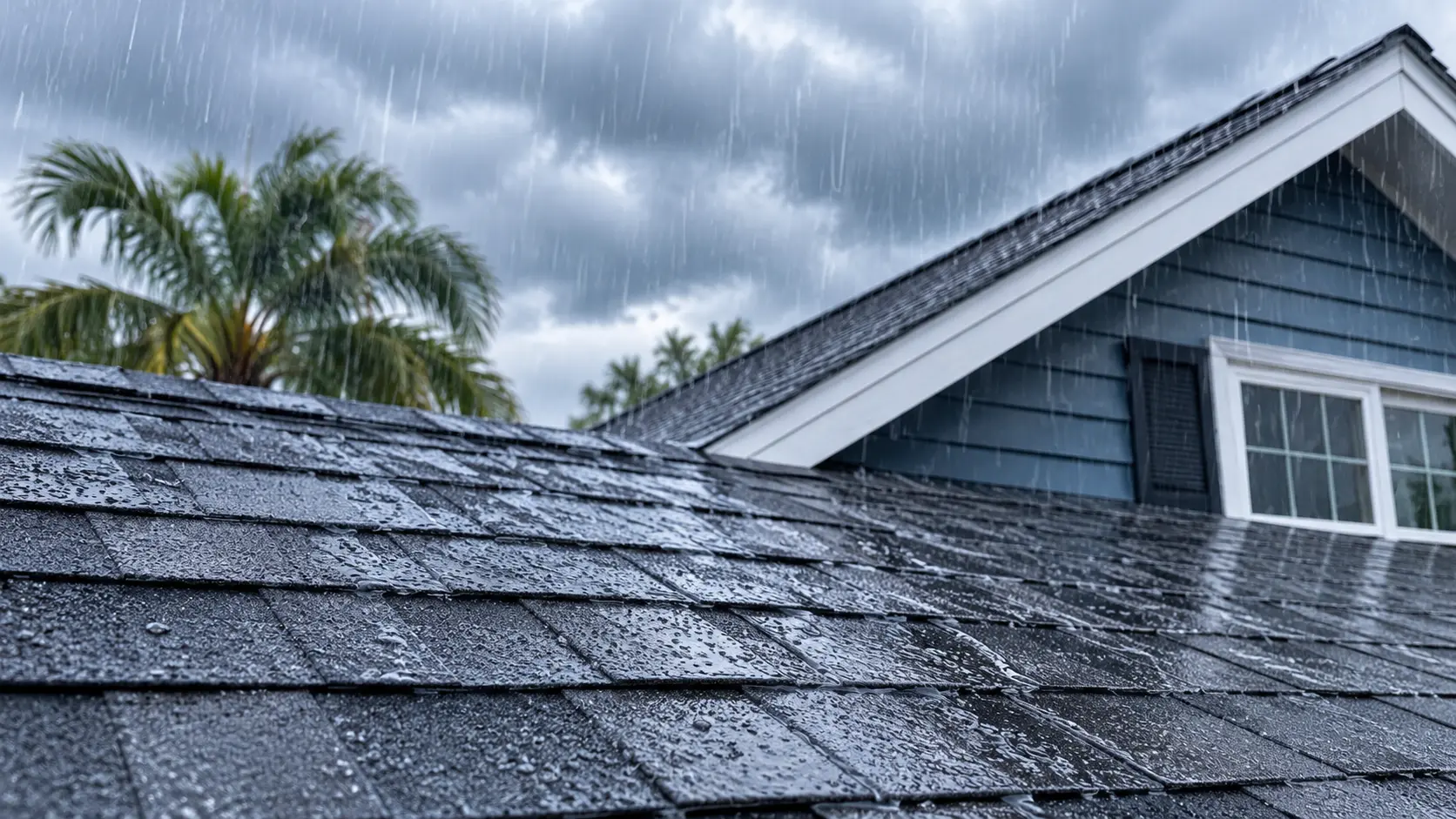
Roof Inspections After Heavy Rain in Brevard County: What Homeowners Should Check
Recent heavy rainfall across Brevard County has left many homeowners dealing with flooding, standing water, and concerns about their properties. Even when a home does not experience flooding, prolonged or heavy rain can expose existing roofing problems and create opportunities for water to enter.
Your roof is your home's first line of defense against the elements. After an extended period of rain, taking a little time to check for signs of water intrusion can help you identify a problem before it becomes more expensive to address.
Here are some things Brevard County homeowners should look for after heavy rain.
1. Check Ceilings and Interior Walls for Water Stains
One of the most noticeable signs of a roof leak is a new water stain on the ceiling or upper portion of a wall.
Look for:
- Brown or yellow discoloration on ceilings
- Bubbling, peeling, or blistering paint
- Damp drywall or soft spots
- Water stains near ceiling fixtures or attic access points
- Musty odors that were not present before
Keep in mind that water stains do not always appear directly beneath the source of a leak. Water can travel along roof framing and other building materials before becoming visible inside your home.
If you notice a new stain after heavy rain, it is worth having the source investigated.
2. Look for Missing, Lifted, or Damaged Shingles
Heavy rain and strong wind can put additional stress on roofing materials, especially if a roof already has loose, aging, or damaged shingles.
From the ground, look for:
- Missing shingles
- Shingles that appear lifted or uneven
- Shingle pieces in the yard or gutters
- Areas where the roof looks noticeably different
- Exposed sections of the roof deck
Do not climb onto your roof to investigate. A wet roof can be extremely slippery, and damage may not be obvious from above. A professional inspection is a safer way to evaluate its condition.
3. Pay Attention to Roof Flashing and Vents
Some roof leaks develop around areas where the roofing system meets another surface or opening.
Flashing helps direct water away from vulnerable areas. It is commonly installed around chimneys, walls, valleys, skylights, and other roof penetrations.
After extended rainfall, problems with flashing or deteriorated seals around roof penetrations may become more noticeable.
Pay particular attention to signs of moisture around:
- Plumbing vent pipes
- Roof valleys
- Chimneys and wall intersections
- Skylights
- Other roof penetrations
These areas deserve attention because even a relatively small opening can allow water to enter during heavy rain.
4. Check Your Attic for Signs of Moisture
If your home has accessible attic space, it may provide additional clues about a possible roof leak.
Look for visible signs such as:
- Damp or discolored roof decking
- Wet insulation
- Water droplets on framing
- Darkened wood
- A musty smell
Only inspect an attic if it is safe to enter. Avoid stepping on ceiling drywall, touching wet electrical components, or entering an area with signs of structural damage. If you suspect an electrical or structural hazard, stay out and contact an appropriate professional.
A roof leak may not immediately show up as a visible ceiling stain, so attic moisture can sometimes reveal an issue earlier.
5. Make Sure Gutters and Downspouts Are Draining Properly
Your gutter system plays an important role in directing rainwater away from your home.
When gutters become clogged with leaves, branches, or other debris, water may overflow and collect near the roofline or foundation.
After heavy rainfall, look for:
- Gutters overflowing during rain
- Debris blocking downspouts
- Gutters pulling away from the roofline
- Water spilling over the sides
- Standing water near the home's foundation
Remember that ground flooding and roof leaks are different problems. A roof inspection can help identify roofing-related water intrusion, but it will not address water entering through doors, windows, foundations, or other parts of the home.
6. Don't Ignore Small Leaks
A small water spot may not seem urgent, especially if the rain has stopped. However, recurring moisture can damage insulation, drywall, wood framing, and other parts of your home.
It is also possible for a leak to appear only during certain wind and rain conditions. A problem that was not noticeable during ordinary showers may become apparent during prolonged or wind-driven rainfall.
If you notice a new leak, document what you see and when it occurs. Take photos of visible damage and contact a qualified roofing contractor to help determine whether the roof is the source.
If water is actively entering your home, protect belongings when it is safe to do so. Avoid wet electrical areas and do not attempt temporary repairs from the roof.
7. Know When to Schedule a Professional Roof Inspection
Not every roof needs repairs after a heavy rain event. However, if you notice new water stains, missing shingles, attic moisture, or other signs of water intrusion, a professional inspection can help determine what is happening.
An inspection can help identify:
- Damaged or deteriorated shingles
- Problems with flashing and roof penetrations
- Areas where water may be entering
- Visible signs of moisture damage
- Roofing components that may need repair or further evaluation
Addressing a roofing issue early may help prevent additional damage. The right solution depends on the roof's condition and the source of the problem. Sometimes a targeted repair is appropriate, while more extensive damage may require a different approach.
Is Your Roof Ready for More Florida Rain?
Brevard County homeowners are no strangers to heavy rain, tropical weather, and changing Florida conditions. After a particularly wet week, it is a good opportunity to pay attention to your home's condition and look for signs that something may need attention.
At Robert Jones Roofing & General Contracting, we help homeowners throughout Titusville and Brevard County with professional roofing inspections, repairs, and replacement estimates.
If you have noticed a leak, damaged shingles, or signs of water intrusion after the recent rainfall, contact our team to discuss an inspection.
Request a Roof Inspection or Estimate
Frequently Asked Questions
Can heavy rain cause a roof to leak?
Yes. Heavy or prolonged rainfall can expose existing weaknesses in roofing materials, flashing, roof penetrations, or other areas. Wind-driven rain can also enter through vulnerable spots that may not leak during ordinary rainfall.
How do I know if my roof is leaking after a storm?
Common warning signs include ceiling stains, peeling paint, damp insulation, musty odors, and visible moisture in the attic. Missing or damaged shingles may also indicate a potential problem.
Should I get my roof inspected after heavy rain?
If you notice signs of water intrusion, visible roof damage, or a leak that was not present before the rainfall, scheduling a professional inspection is a good idea. An inspection can help identify the source and determine whether repairs are needed.
Does flooding mean my roof is damaged?
Not necessarily. Flooding generally involves water entering or collecting at ground level, while roof leaks involve water entering through the roofing system. A home can experience one problem without the other. If you notice ceiling stains or attic moisture, have the roofing system evaluated separately.
How quickly should I address a roof leak?
A suspected roof leak should be evaluated as soon as reasonably possible. Even a small leak can lead to additional moisture damage if it continues. Avoid climbing onto a wet roof or attempting repairs yourself.